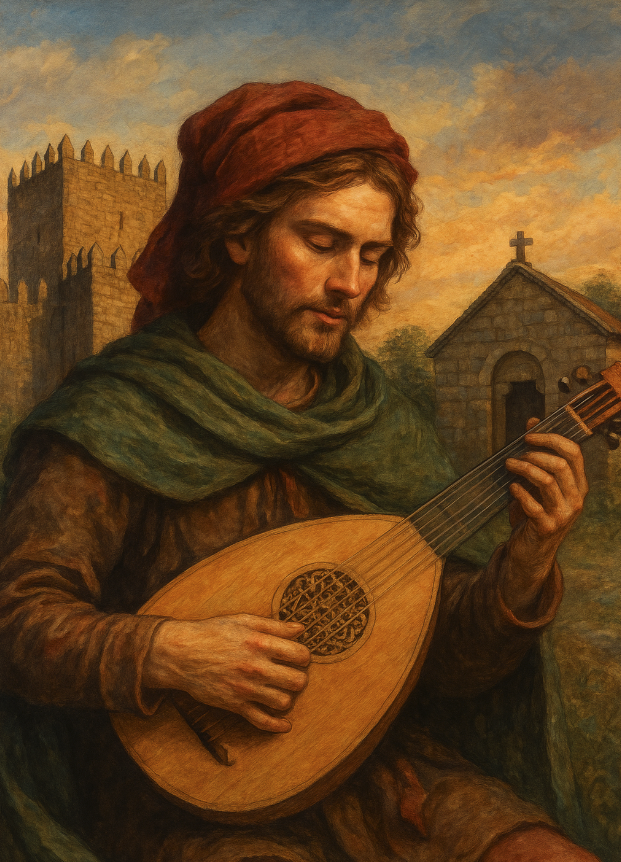
The Gritting Troubadour and the Foundational Voice: A Historical-Stylistic Analysis of a Contemporary Sound Work on Afonso Henriques (1125–1128) by Gaspar do Amaral
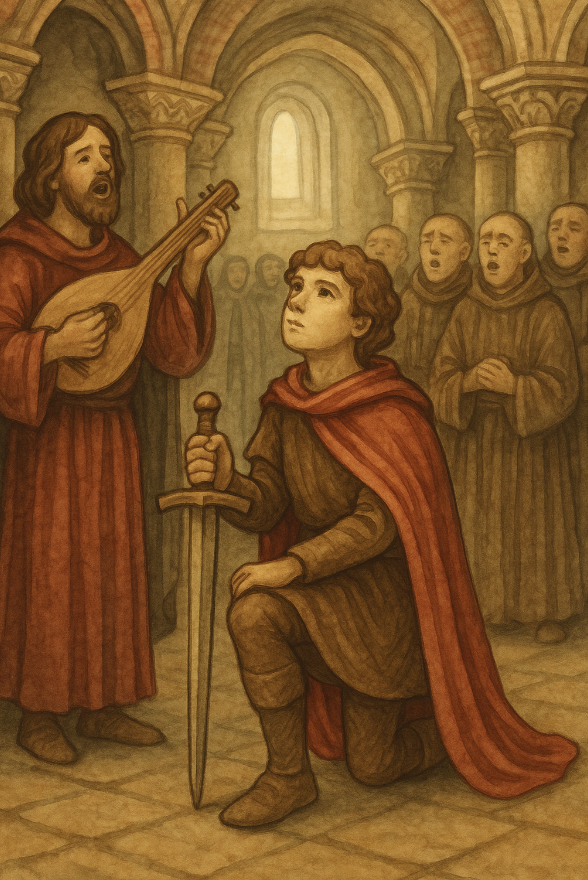
Figura Nº 1 – Representação artística do Jovem Cavaleiro D. Afonso Henriques (15/16 anos) em Zamora (1125). Este momento marcou o início formal do seu percurso militar e político.
Figure No. 1 – Artistic representation of the young knight D. Afonso Henriques (15/16 years old) in Zamora (1125). This moment marked the formal beginning of his military and political career.
Resumo
Este artigo propõe uma análise crítica e interdisciplinar da obra sonora Trovador Gritante – Afonso Henriques, de Zamora (1125) a Guimarães (1128) de Gaspar do Amaral. Através de uma abordagem que conjuga história medieval, estética musical, performance vocal e simbolismo nacional, a peça é analisada no modo como reinterpreta o percurso do primeiro rei de Portugal entre Zamora (1125) e Guimarães (1128), transfigurando-o numa narrativa poético-sonora de carácter fundador. O artigo é da autoria do próprio criador da obra.
Abstract
This article presents a critical and interdisciplinary analysis of the sound work Trovador Gritante – Afonso Henriques, by Gaspar do Amaral. Through an approach that combines medieval history, musical aesthetics, vocal performance, and national symbolism, the piece is examined in terms of how it reinterprets the path of Portugal’s first king between Zamora (1125) and Guimarães (1128), transforming it into a poetic and sonic narrative of foundational character. The article is authored by the creator of the work.
1. Introdução / Introduction
A abordagem teórica deste artigo é fortemente influenciada pela concepção de Roland Barthes sobre a expressividade vocal como “grão da voz” [4], pela visão de Umberto Eco sobre a obra aberta [3], e pelos contributos de Manuel Pedro Ferreira para o estudo da monodia medieval portuguesa [2].
The theoretical approach of this article is strongly influenced by Roland Barthes’s concept of vocal expressiveness as the “grain of the voice” [4], Umberto Eco’s vision of the open work [3], and Manuel Pedro Ferreira’s contributions to the study of medieval Portuguese monody [2].
A evocação sonora da figura de Afonso Henriques é rara na tradição musicológica portuguesa. Este estudo parte da obra Trovador Gritante para explorar uma proposta contemporânea singular: a criação de uma peça sonora performativa onde a história nacional é evocada não por reconstrução, mas por dramatização expressiva. A obra constitui um caso relevante para a musicologia histórica, os estudos de performance e a historiografia cultural portuguesa.
The sonic evocation of Afonso Henriques is rare in the Portuguese musicological tradition. This study begins with the work Trovador Gritante to explore a unique contemporary proposal: the creation of a performative sound piece in which national history is invoked not through reconstruction, but through expressive dramatization. The work is a relevant case for historical musicology, performance studies, and Portuguese cultural historiography.
Audio Nº 1: Audio com Direção Artística de Gaspar Amaral com o Trovador Gritante, na Cantiga “Afonso Henriques, de Zamora (1125) a Guimarães (1128)” com assistência por Inteligência Artificial (IA)
2. Contexto Histórico: De Zamora a Guimarães / Historical Context: From Zamora to Guimarães
A estrutura narrativa da peça está profundamente enraizada em fontes primárias e na historiografia medieval, como a Chronica Gothorum, o Chronicon Lusitanum e o De expugnatione Lyxbonensi. Estes documentos fornecem não apenas o pano de fundo factual das acções de D. Afonso Henriques, mas também a carga simbólica com que a sua figura tem sido retratada ao longo dos séculos.
The narrative structure of the piece is deeply rooted in primary sources and medieval historiography, such as the Chronica Gothorum, the Chronicon Lusitanum, and the De expugnatione Lyxbonensi. These documents provide not only the factual background of Afonso Henriques’s actions, but also the symbolic charge with which his figure has been portrayed over the centuries.
A Chronica Gothorum destaca a herança visigótica como matriz da realeza cristã peninsular, reforçando a legitimidade ancestral que Afonso invoca no seu gesto fundador. O Chronicon Lusitanum, com a sua referência à Batalha de São Mamede, é essencial para posicionar o episódio como um ponto de viragem para a autonomia política e identidade emergente. A obra sonora de Gaspar do Amaral recupera esta tradição, não por transcrição literal, mas por dramatização interpretativa em chave poética e musical.
The Chronica Gothorum highlights the Visigothic heritage as the matrix of Christian peninsular kingship, reinforcing the ancestral legitimacy that Afonso invokes in his foundational gesture. The Chronicon Lusitanum, with its reference to the Battle of São Mamede, is crucial in positioning the episode as a turning point for political autonomy and emerging identity. Gaspar do Amaral’s sound work reclaims this tradition not through literal transcription, but via poetic and musical interpretive dramatization.
A peça gira em torno de dois acontecimentos decisivos:
- Armação em Zamora (1125): momento simbólico que marca a transição de Afonso de infante a cavaleiro, fora do território galaico-português, com o apoio de forças leonesas e legitimidade própria.
- Batalha de São Mamede (1128): o primeiro grande confronto militar do futuro rei, tradicionalmente interpretado como o alvorecer da independência portuguesa.
The piece revolves around two decisive events:
- Knighting in Zamora (1125): A symbolic moment marking Afonso’s transition from infante to knight, outside the Galician-Portuguese territory, with the support of Leonese forces and personal legitimacy.
- Battle of São Mamede (1128): The first major military confrontation of the future king, traditionally interpreted as the dawn of Portuguese independence.
3. Análise Formal da Obra Sonora / Formal Analysis of the Sound Work
3.1. Forma e Estrutura / Shape and Structure
A peça desenrola-se num único movimento contínuo, com duração aproximada de três minutos e meio, podendo ser dividida em três grandes fases:
- Invocação – abertura grave com reverberação ambiente;
- Clamor – secção central com voz projectada em grito trovadoresco;
- Resolução – encerramento mais contido, mas ainda em tensão.
The piece unfolds in a single continuous movement, lasting approximately three and a half minutes, and can be divided into three main phases:
- Invocation – a grave opening with ambient reverberation;
- Clamour – central section with voice projected in a troubadour-like outcry;
- Resolution – a more contained but still tense conclusion.
3.2. Voz e Performance / Voice and Performance
A performance vocal está no centro da peça:
- Timbre vocal: forte, rugoso, deliberadamente “imperfeito”;
- Articulação: pausas dramáticas, ritmo de fala variado;
- Entoação: declamação cantada em registo quase litúrgico ou ritualístico.
Vocal performance is at the heart of the piece:
- Vocal timbre: strong, rough, intentionally “unpolished”;
- Articulation: dramatic pauses, varied speech rhythm;
- Intonation: sung declamation in a near-liturgical or ritual register.
4. Atmosfera Musical e Simbolismo / Musical Atmosphere and Symbolism
4.1. Textura Sonora / Sound Texture
- Paisagem sonora: fundo tonal grave, ressonância tipo catedral;
- Harmonia: ausência de melodia reconhecível; ênfase em bordões e harmónicos;
- Densidade: mínima, realçando a centralidade da voz.
- Soundscape: low tonal background, cathedral-like resonance;
- Harmony: absence of recognisable melody; emphasis on drones and overtones;
- Density: minimal, enhancing vocal centrality.
4.2. Simbolismo Sonoro / Sound Symbolism
As escolhas estéticas evocam:
- Espiritualidade medieval (ressonâncias litúrgicas);
- Solenidade do juramento ou proclamação fundacional;
- Ato ritualístico: o trovador surge como xamã ou arauto.
The aesthetic choices evoke:
- Medieval spirituality (liturgical resonances);
- Solemnity of oath or foundational proclamation;
- Ritual act: the troubadour appears as a shaman or herald.
5. Interpretação Crítica / Critical Interpretation
A obra Trovador Gritante não se limita a ilustrar um facto histórico. Tal como defende Umberto Eco na sua teoria da obra aberta [3], ela invoca — no sentido ritual — uma memória fundadora, propondo uma escuta emocional e simbólica do surgimento de Portugal. A expressão “trovador gritante” recorda o conceito de Barthes sobre o “grão da voz” [4], onde o corpo e a alma do intérprete se fundem no som. A sua dimensão estética ecoa também as práticas medievais descritas por Ferreira [2], alinhando-se com o universo monofónico e ritualizado do canto litúrgico.
The work Trovador Gritante does not merely illustrate a historical fact. As Eco argues in his theory of the open work [3], it invokes — in the ritual sense — a foundational memory, proposing an emotional and symbolic listening of Portugal’s emergence. The expression “gritting troubadour” recalls Barthes’s concept of the “grain of the voice” [4], where the body and soul of the performer merge in the sound. Its aesthetic dimension also echoes medieval practices described by Ferreira [2], aligning with the monophonic and ritualised universe of liturgical chant.
6. Estrutura Narrativa, Simbolismo, Letra Completa, Temporização e Interpretação Musical / Narrative Structure, Symbolism, Complete Lyrics, Timing and Musical Interpretation
A letra da peça está organizada em blocos temáticos cuidadosamente encadeados, correspondentes a fases simbólicas do percurso fundacional de Afonso Henriques entre 1125 e 1128. Esta divisão articula não apenas a progressão histórica, mas também a construção poética e sonora da composição. Cada bloco funciona como uma estação num percurso iniciático, onde palavra, ritmo e tonalidade convergem para construir uma evocação épica e espiritual. A seguir apresenta-se o alinhamento aproximado de cada segmento com o tempo decorrido no áudio, seguido da respetiva transcrição e comentário interpretativo em português e inglês.
The lyrics of the piece are organized into carefully linked thematic blocks, corresponding to symbolic phases of Afonso Henriques’ foundational journey between 1125 and 1128. This division articulates not only the historical progression, but also the poetic and sonic construction of the composition. Each block functions as a station on an initiatory journey, where word, rhythm and tonality converge to construct an epic and spiritual evocation. Below is the approximate alignment of each segment with the elapsed time in the audio, followed by the respective transcription and interpretative commentary in Portuguese and English.
[00:00–00:17] Em Zamora, … Afonso Henriques … de quatorze anos, … fez um juramento. A mão na espada, … o aço frio, … o olhar no céu …. Colocou o passo no caminho … que ninguém previu …
Interpretação: Este bloco inicia a peça com um registo declamatório grave, quase litúrgico. A escolha do cenário de Zamora sugere não só o local histórico da investidura de Afonso Henriques, mas também um espaço sacral onde a fundação simbólica de Portugal tem início. A melodia é monofónica, sustentada por um bordão harmónico constante, reminiscente do cantochão. A estrutura vocal seria perfeitamente aceitável numa catedral como a de Zamora, dada a sobriedade melódica e a articulação expressiva do texto.
[00:00–00:17] In Zamora, … Afonso Henriques … fourteen years old, … made a vow. Hand on the sword, … cold steel, … eyes to the sky …. He stepped onto a path … that no one foresaw …
Interpretation: This block opens the piece with a grave, almost liturgical register. The choice of Zamora as the setting suggests not only the historical site of Afonso Henriques’s investiture, but also a sacral space where the symbolic founding of Portugal begins. The melody is monophonic, sustained by a constant harmonic drone, reminiscent of plainchant. The vocal structure would be perfectly acceptable in a cathedral like Zamora, given the melodic austerity and expressive articulation of the text.
[00:17–00:40] Panóplia vestida, o peso na mão Preparar o destino, … a nova missão.
[00:17–00:40] Armour worn, weight in hand, Preparing destiny, … the new mission.
[00:40–01:00] Anos a forjar a força, … a aprender a lutar … Cavalo e Lança prontos para enfrentar …
[00:40–01:00] Years forging strength, … learning to fight … Horse and Lance ready to face …
[01:00–01:15] O tempo chamou, … não há mais … espera agora.
[01:00–01:15] Time called, … no more … waiting now.
[01:15–01:30] Em cada treino, … a mentalidade para esta hora.
[01:15–01:30] In each training, … the mindset for this hour.
[01:30–01:50] São Mamede, … em Guimarães, … o Sol a sorrir … Naquela tarde, … a terra a florir.
[01:30–01:50] São Mamede, … in Guimarães, … the Sun smiling … That afternoon, … the land blossoming.
[01:50–02:10] Não foi só batalha, … foi o preço a pagar. Pelo sonho, … o Portugal nasce no lugar.
[01:50–02:10] It wasn’t just a battle, … it was the price to pay. For the dream, … Portugal is born in that place.
[02:10–02:25] A primeira tarde, … o sangue no chão … Por Portugal, bate o coração! bate o coração!
[02:10–02:25] The first afternoon, … blood on the ground … For Portugal, the heart beats! the heart beats!
Refrão 1 – Interpretação: Este é o primeiro ponto culminante da peça. A linha melódica sobe de oitava, contrastando com os blocos anteriores. O refrão “bate o coração!” é repetido como eco emocional e simbólico. Trata-se de um refrão construído em registro médio-agudo, com inflexão modal ascendente. A monofonia mantém-se, mas o vigor rítmico e o timbre ampliado elevam a densidade emocional. É aqui que a voz atinge o seu primeiro clímax.
Refrain 1 – Interpretation: This is the first climactic moment of the piece. The melodic line rises an octave, contrasting with previous blocks. The refaria “the heart beats!” is repeated as an emotional and symbolic echo. It is built in a mid-high register with ascending modal inflection. The monophony remains, but the rhythmic drive and expanded timbre raise the emotional density. Here the voice reaches its first climax.
[02:25–02:40] Homens leais, da terra a união com o Bispo de Braga, na mesma oração
[02:25–02:40] Loyal men, the land united, with the Bishop of Braga, in the same prayer.
[02:40–03:00] Sob a Cruz Azul, escudo na nossa frente Numa só hoste, a força da nossa gente
[02:40–03:00] Beneath the Blue Cross, shield before us, In one host, the strength of our people.
[03:00–03:15] Fideles e povo, na mesma vontade Construir o futuro, movimento para a liberdade
[03:00–03:15] Faithful and people, with the same will, To build the future, a movement for freedom.
[03:15–03:30] Anos a forjar a força, a aprender a lutar Cavalo e Lança prontos para enfrentar
[03:15–03:30] Years forging strength, learning to fight, Horse and Lance ready to face.
[03:30–03:45] O tempo chamou, não há mais espera agora
[03:30–03:45] Time called, no more waiting now.
[03:45–04:10] Em cada passo, a lutar por esta hora São Mamede, … em Guimarães, … o Sol a sorrir … Naquela tarde, … a terra a florir Não foi só … batalha, … foi o preço a pagar. Pelo sonho, …. o Portugal … Portugal nasce neste seu lugar.
[03:45–04:10] In every step, fighting for this hour, São Mamede, … in Guimarães, … the Sun smiling … That afternoon, … the land blossoming. It wasn’t just … a battle, … it was the price to pay. For the dream, … Portugal … Portugal is born in this place.
[04:10–04:30] A primeira tarde, … o sangue no chão … por Portugal, bate o coração! bate o coração!
[04:10–04:30] The first afternoon, … blood on the ground … for Portugal, the heart beats! the heart beats!
Refrão 2 – Interpretação: Neste segundo refrão, há um regresso ao motivo “bate o coração”, agora reforçado pelo contexto de morte e sacrifício. A oitava utilizada é ligeiramente mais baixa que no refrão anterior, conferindo um tom mais grave e comovente. A entrega vocal é mais prolongada, com silêncios expressivos entre os versos. A atmosfera criada evoca a ressonância de uma nave de igreja, confirmando a compatibilidade estilística com o espaço catedralício.
Refrain 2 – Interpretation: In this second refrain, the “heart beats” motif returns, now reinforced by the context of death and sacrifice. The octave used is slightly lower than in the first refrain, giving it a more solemn and moving tone. The vocal delivery is more sustained, with expressive silences between verses. The atmosphere created evokes the resonance of a church nave, confirming its stylistic compatibility with the cathedral space.
[04:30–04:55] Combatentes que caem, … memória que fica … O sacrifício que a história publica.
[04:30–04:55] Fallen fighters, … memory that remains … The sacrifice history makes public.
[04:55–05:10] Os corpos pelo campo, … a única certeza que leu Esta Batalha valeu… Portugal, aconteceu !
[04:55–05:10] Bodies across the field, … the only certainty read This Battle was worth it… Portugal happened!
[05:10–05:30] São Mamede, … em Guimarães, … o Sol a sorrir … Naquela tarde, … a terra a florir. Não foi só batalha, … foi o preço a pagar. Pelo sonho, …. o Portugal nasce no lugar. A primeira tarde, … o sangue no chão … por Portugal, bate o coração! bate o coração!
[05:10–05:30] São Mamede, … in Guimarães, … the Sun smiling … That afternoon, … the land blossoming. It wasn’t just a battle, … it was the price to pay. For the dream, … Portugal is born in this place. The first afternoon, … blood on the ground … for Portugal, the heart beats! the heart beats!
6.2. Recursos Poéticos e Estilísticos / Poetic and Stylistic Devices
- Uso expressivo das reticências: recurso dominante ao longo da obra, criando espaço respiratório e emocional entre os blocos narrativos;
- Paralelismo e anáforas: estruturam a memória e a intensidade, como nos versos “bate o coração” e “Portugal nasce no lugar”;
- Metáforas militares e simbólicas: elevam o discurso bélico a uma missão providencial;
- Intertextualidade implícita: referências às tradições épicas e espirituais da literatura medieval portuguesa.
- Expressive use of ellipses: a dominant feature that creates emotional and rhythmic space between narrative blocks;
- Parallelism and anaphora: structure memory and intensity, as seen in lines such as “bate o coração” (“the heart beats”) and “Portugal nasce no lugar” (“Portugal is born in that place”);
- Military and symbolic metaphors: elevate the discourse of battle to a providential mission;
- Implicit intertextuality: references to epic and spiritual traditions in medieval Portuguese literature.
6.3. Vocalidade e Interpretação / Vocality and Interpretation
Gaspar do Amaral constrói a sua performance como um ritual vocal de evocação histórica. A sua voz alterna entre murmúrio, clamor e grito, com pausas dramáticas que criam tensão e expansão emocional. O timbre é deliberadamente humano, rugoso, mortal — recusando a perfeição melódica para abraçar a verdade expressiva. Trata-se de uma interpretação que não se limita a cantar: profetiza, exorta, consagra.
Gaspar do Amaral builds his performance as a vocal ritual of historical evocation. His voice alternates between murmur, clamour and cry, with dramatic pauses that create tension and emotional expansion. The timbre is deliberately human, rough, mortal — rejecting melodic perfection to embrace expressive truth. This is a performance that does not merely sing: it prophesies, exhorts, and consecrates.
7. Conclusão / Conclusion
A obra sonora Trovador Gritante – Afonso Henriques, de Zamora (1125) a Guimarães (1128) de Gaspar do Amaral, revela-se um contributo inovador para a intersecção entre arte sonora, história medieval e identidade nacional. Ao recuperar o espírito trovadoresco numa linguagem performativa e contemporânea, reabre a escuta das origens de Portugal não pela racionalidade historiográfica, mas pela ressonância emocional. A obra constitui um caso exemplar de arte sonora contemporânea com fundações históricas, com implicações pedagógicas, culturais e patrimoniais.
The sound work Troubadour Gritante – Afonso Henriques, from Zamora (1125) to Guimarães (1128) by Gaspar do Amaral, emerges as an innovative contribution to the intersection of sound art, medieval history, and national identity. By recovering the troubadour spirit in a performative and contemporary language, it reopens listening to the origins of Portugal not through historiographical rationality, but through emotional resonance. The work stands as an exemplary case of contemporary sound art with historical foundations, bearing pedagogical, cultural, and heritage implications.
Referências / References
- Mattoso, José. D. Afonso Henriques. Círculo de Leitores, 2006.
- Ferreira, Manuel Pedro. O Som de Aquém e Além-Mar. CNCDP, 1996.
- Eco, Umberto. A Obra Aberta. Edições 70, 1989.
- Barthes, Roland. O Grão da Voz. Edições 70, 2009.
- Amaral, Gaspar do. Trovador Gritante – Afonso Henriques (2025). Obra sonora original.
- Mattoso, José. D. Afonso Henriques. Círculo de Leitores, 2006.
- Ferreira, Manuel Pedro. The Sound from This Shore and Beyond. CNCDP, 1996.
- Eco, Umberto. The Open Work. Harvard University Press, 1989.
- Barthes, Roland. The Grain of the Voice. University of California Press, 2009.
- Amaral, Gaspar do. Trovador Gritante – Afonso Henriques (2025). Original sound work.
No responses yet